When I first set foot on this barren land with goods on my back, what sounded in my ears was not music, but the sound of the wind. It is not an ordinary wind sound, but a mixture of low-frequency buzzing, subsonic vibrations and some indescribable spatial echo. In this world of _Dead Stranding_, silence has never been silent, but a kind of tension.
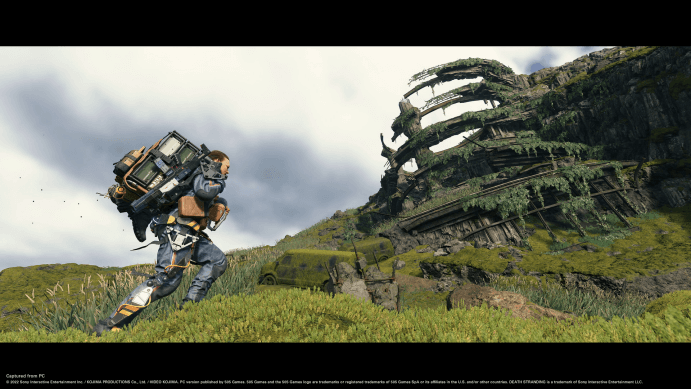
I remember that when crossing the Central and Western Plains, the sound of the time rain hitting the helmet gradually became a regular beat. My breathing echoed in the mask, and the shaking of the goods made a squeaking sound, and the most disturbing thing was the almost inaudible low-frequency vibrations — they seemed to come from the depths of the ground and from another dimension. When I climbed a hillside with difficulty, even these sounds disappeared, leaving only the sound of my heart beating wildly in my chest. The loneliness created by the sound is stronger than any written description.
Every encounter with BT is a sound nightmare. At first, it was just a baby crying, and then a noise like a radio FM began to appear in the air. When BT really appeared, the low-frequency roar was not transmitted through the ears, but through the bones to the whole body. I will never forget the first time I was dragged into the tar lake by BT — all the sounds were isolated in an instant, replaced by a sticky and suffocating silence, as if even time itself had frozen.
The most exquisite thing is the design of the equipment sound in the game. Every time the backpack strap is adjusted, it will make different friction sounds. Goods of different materials will produce a unique rhythm when walking, and even there is a corresponding swallowing sound when drinking the magic drink. These subtle sounds have become my closest companions on the long journey. Once I lost my way in a snowstorm. It was by listening to the changes in the shaking frequency of the goods that I realized that I was going downhill and finally found a shelter.
With the increasing interaction with other players' buildings, I found another deep meaning in this sound world. When I first saw the zip lines built by other players in the wasteland, there was a crisp sound of bells in the wind; when I used the safe house to rest, I could hear the slight echo left by the previous user; even when I passed the footprints of other players, I could vaguely hear the afterglow of their stopping here. These sound clues build a wonderful connection, turning the lonely delivery journey into a group creation full of emotion.
One rainy day after customs clearance, I stood outdoors in real and suddenly realized that _Death Stranding_ had changed my auditory perception. Now whenever I hear the low thunder in the distance or feel the strong wind passing through my body, I will unconsciously think of the days of trekking in the virtual wilderness. This may be the effect that Hideo Kojima and composer Ludvig Forssell want to achieve - instead of creating new sounds, they teach us how to listen to the silence that originally existed in the world.
If you also want to re-understand the power of sound and silence, _Dead Stranding_ will give you the most profound inspiration. Here, every subtle sound tells the story of survival, and every deliberate silence reminds us that true connection is often born in the deepest loneliness.