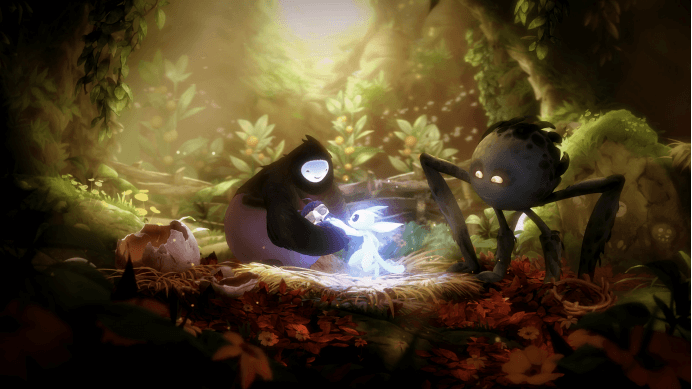
When I chased the mysterious elf’s light for the first time in the Niwen, the music in my ear made me instantly understand what “visual symphony poetry” was. There are no lines and no words, but every note tells the deep affection between Ori and Ku beyond words.
Remember the difficult journey in the Ink Swamp. The whisper of the cello spreads underfoot like ink, and the solo of the oboe is like a glimmer of light in the dark. When I controlled Ori to jump between the dead branches, the sound of the piano followed my every operation like a heartbeat. The most amazing thing is that when I make a mistake and fall, the music does not interrupt, but naturally turns into a sad variation, just like a soft comfort. The perfect synchronization of music and game operation makes the whole adventure an elegant ballet.
The battle with Mora is a model of audio-visual art. At the beginning, the violin depicted the restlessness of the spider with a hurried bow, and the beating of the tuning drum was like its angry heartbeat. When the battle heated up, the whole orchestra suddenly joined in, the brass instrument made a majestic announcement, and the voice of the choir was like an ancient prayer. But the moment that moved me most was after the battle — the music gradually subsided, and only a flute was left playing a soothing melody in the silence, as if the whole forest was singing for Mora’s rest.
I will never forget the night when Bauer touched the snowfield. Ori struggled in the snowstorm, but the music was surprisingly gentle. The notes of the piano are as light as snowflakes, and the string music creates the vastness of the snowfield with continuous long notes. The occasional sound of bells is like twinkling stars in the night sky. Although they are in the cold, music makes people feel warm and hopeful. This kind of magic of reversing the situation with music is the most moving part of _Ori and the Will of the Wisps_.
As the journey progressed, I found that each biome has its own unique musical personality. The Windswept Wastes with rapid beats and discords, while Luma Pools creates a quiet and peaceful atmosphere with the sound of harps and water drops. The most ingenious is the musical design of Silent Woods — there is almost no melody there, only the rustling of the wind blowing through the dead leaves, the whispering of animals in the distance, and the echo of Ori’s footsteps in the empty forest. This deliberate “white” conveys the weight of silence better than any gorgeous movement.
One afternoon after clearing the customs, I closed my eyes and listened to the original sound of the game again. When “Ori Theme” sounded again, those silent memories surged like a tide: the joy of spreading wings and flying for the first time, the shock of meeting Gumo, and the tears of farewell at the end... It turns out that the real story has long been written into every note by the composer Gareth Coker.
If you also want to experience this kind of emotional communication beyond language, _Ori and the Will of the Wisps_ will give you the most poetic journey. Here, music is not only the background, but also a breathing character, a flowing landscape, and the most beautiful destination for all unspoken words. When the last note dissipates in the air, you will find that the most moving stories never need lines.